Serving Oakley, CA and surrounding areas. (925) 409-3731
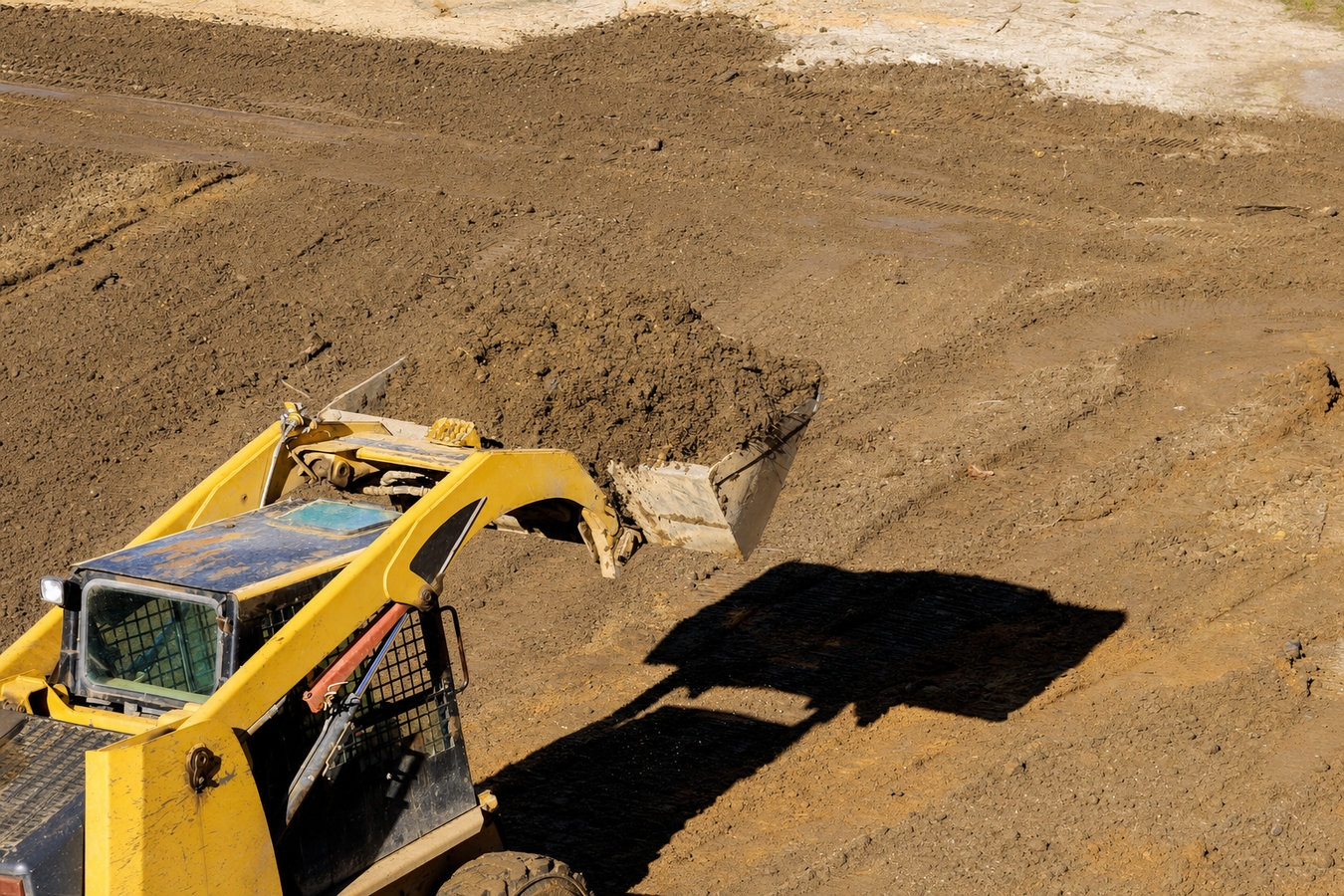
New pavement is only as good as what sits underneath it. We excavate, shape, and compact your base to handle Oakley's clay soils - so your driveway does not crack, sink, or shift within a season or two.
Grading and excavation in Oakley means removing unstable soil, shaping the subgrade to the correct slope for drainage, and compacting the base in layers so it will not shift when Contra Costa County clay swells in winter - most residential driveway prep jobs take one to two days before paving begins.
A smooth asphalt surface is only as good as what sits underneath it. If the soil is soft, uneven, or poorly compacted, the pavement above will flex, crack, and develop low spots where water pools. That is especially true in Oakley, where the clay-heavy Delta-region soils expand and contract with every wet-dry cycle. Grading and excavation done right is what makes the difference between pavement that lasts a decade and pavement that needs patching within two or three years. If you are already seeing surface damage on an existing driveway, our drainage solutions service can address the water management side at the same time.
The grading phase is also where drainage direction is set. Water should always move away from your home and off the paved surface - never toward your foundation or onto a neighbor's property. Getting that slope right during base prep is far easier than trying to correct it after paving.
If puddles sit on your driveway or parking area after rain - or even after running a sprinkler - the ground beneath has likely shifted or settled unevenly. In Oakley, this is often caused by clay soil expanding and contracting through wet and dry seasons. Regrading the base before repaving is the fix that actually lasts.
If you have patched cracks before and they return in the same location, the problem is almost certainly in the base, not the surface. Recurring cracks are a sign that the soil underneath is moving or was never properly compacted. No surface repair will hold until the underlying grade is corrected.
If you see water pooling near your foundation or running along the side of your house after rain, your driveway or yard grade is working against you. This is a drainage problem that grading can solve - and one worth addressing before it causes foundation or moisture damage over time.
Sections of pavement that have risen, tilted, or become noticeably uneven are a sign that the soil below has moved - a common result of Oakley's expansive clay soils going through wet and dry cycles. Patching the surface will not fix a heave; the base needs to be excavated, regraded, and recompacted before new pavement goes down.
We begin every project with a site assessment that looks at existing drainage patterns, soil conditions, and what is going on top. From there, the crew excavates to the required depth, removes and hauls away unstable material, and shapes the subgrade to the correct slope so water will drain away from your home and off the finished surface. Base compaction is done in layers - each lift is compacted before the next goes down. Rushing this step is the most common reason new pavement fails early, and we do not skip it. For projects that require a grading permit from the city, we handle the application and coordinate inspections so the work is on the record when it counts.
Grading and excavation is almost always paired with another scope of work. Customers adding a new driveway will move into asphalt paving once the base is ready. Those addressing drainage issues alongside their base work can combine this service with our concrete curbing and sidewalks service to direct water where it belongs. For properties where surface drainage is a persistent problem, combining base prep with a dedicated drainage solutions scope gives you the most complete fix.
Best for properties adding a new driveway or parking pad - complete excavation, grading, and compaction before asphalt paving begins.
Suited for existing driveways with low spots, drainage problems, or recurring cracks caused by an uneven or settled base layer.
For projects requiring removal of large volumes of soil or old material - excavation, loading, and off-site disposal as part of a complete base rebuild.
For projects that trigger Oakley's permit threshold - we pull the permit, manage the inspection timeline, and give you documented, city-approved work.
Oakley sits in eastern Contra Costa County, right on the edge of the Sacramento-San Joaquin Delta, where the soils are predominantly heavy clay. Clay soil is called expansive for a reason - it swells significantly when it absorbs water and contracts again as it dries out. That cycle repeats every year through Oakley's wet winters and dry summers, pushing and pulling at anything built on or in the ground. A base that was not excavated deep enough or compacted firmly enough will show the effects of that movement within a season or two - usually as cracks, low spots, or heaved sections in the pavement above. Accounting for this soil behavior during the base prep phase is what separates work that holds up from work that needs to be redone. The U.S. Geological Survey documents how expansive soils affect infrastructure across the region.
Timing also matters in Oakley. Grading and base compaction work best when the soil is dry and stable, which means late spring through early fall is the reliable window for most projects here. Starting prep work during a wet stretch risks disrupting compaction before paving begins. Homeowners in Brentwood and Antioch deal with the same Delta-region clay and the same seasonal constraints - scheduling base work during the dry season is sound practice throughout this part of Contra Costa County.
We visit your property, assess soil conditions and existing drainage patterns, and measure the scope. You receive a written estimate that spells out what will be excavated, how deep, and what happens to the removed material. We respond within one business day of your initial contact.
If the project requires a grading permit, we submit the application to the city before any work begins. We also call for a utility locate before any digging - this is required by law in California and protects your gas, water, and electrical lines.
The crew excavates to the required depth, shapes the subgrade to the correct slope, and directs drainage away from your home. Removed material is hauled away or redistributed on-site as agreed. Expect equipment noise and a temporarily disturbed surface area during this phase.
Base material is compacted in layers until the subgrade is firm and even. If a permit was pulled, the city inspector signs off before paving begins. We walk the finished grade with you and confirm drainage direction before leaving the site.
Free on-site assessment, written quote, no pressure. We respond within one business day.
(925) 409-3731We work in Oakley's Delta-region clay soils on every project, so we know how deep to go and how many compaction passes are needed for a base that will not shift. A contractor who does not understand expansive soil will set the same depth as they would in sandy ground - and the result will show within a season.
Getting water away from your home and off the paved surface is not an afterthought - it is part of how we shape every subgrade. In Oakley's flat terrain near the Delta, where water does not always have an obvious place to go, correct drainage slope is the most important thing grading accomplishes.
We know Oakley's permit thresholds and pull the required approvals before breaking ground. Permitted, inspected grading is on the record - which protects you if you sell the home and a buyer's inspector comes looking. A contractor who talks you out of a permit that is actually required is creating a problem for you, not saving you money.
We hold an active California contractor's license verifiable through the Contractors State License Board. Grading and excavation involves heavy equipment and site-altering work - you want a licensed, insured contractor on your property, not an unlicensed crew that disappears if something goes wrong.
The grading and excavation phase is where the long-term performance of any paved surface is decided. We take it seriously, do it correctly, and make sure the drainage direction and compaction are right before anyone lays a single inch of asphalt on top.
After grading establishes drainage direction, curbing locks it in and gives paved edges a clean, defined border.
Learn MoreFor properties where surface water needs more than slope to manage - drainage inlets, channels, and underground systems that work alongside a well-graded base.
Learn MoreCall us today or request a free estimate - grading work is best scheduled in the dry season, so do not wait until fall to start the conversation.